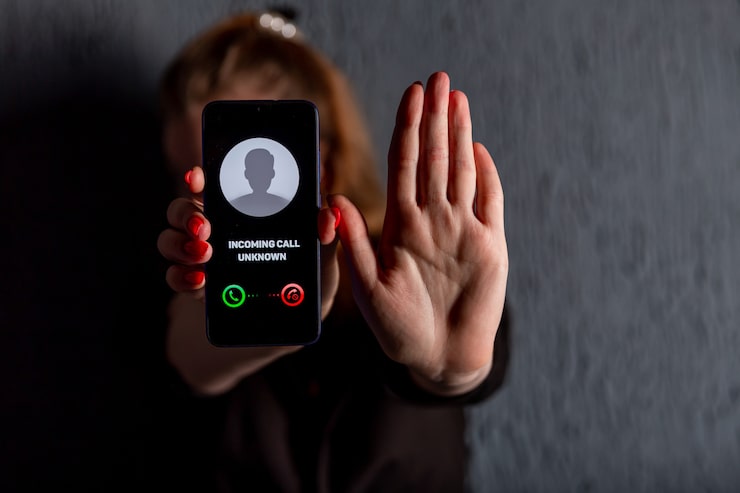
1916407418 appears on phone screens without warning, often during ordinary moments, and that sudden interruption is exactly how high-risk scam calls begin. Many people first encounter this number as a missed call or a short automated message that feels official but oddly incomplete. That uneasy feeling is the first signal something may be wrong.
High-risk scam calls are designed to blend into everyday communication. They don’t always threaten or shout. Instead, they quietly introduce doubt, urgency, or concern, giving the scammer psychological control before the target realizes what’s happening.
What Makes a High-Risk Scam Call Different
Not every unknown call is dangerous, but high-risk scam calls stand apart because of intent and structure. Calls linked to 1916407418 have repeatedly been associated with attempts to trigger fast decision-making around finances, identity, or legal status.
These calls often reference account irregularities, suspicious transactions, or compliance issues. The language sounds formal enough to feel legitimate, yet vague enough to avoid verification. That balance is intentional.
High-risk scam calls are not random. They are scripted, tested, and refined over time.
Why 1916407418 Has Drawn So Much Attention
This number has been searched and discussed frequently because of consistent behavior patterns. People report similar call timing, similar automated voices, and similar prompts asking them to act quickly.
When many unrelated individuals describe nearly identical experiences, it signals coordination rather than coincidence. That shared pattern is why 1916407418 is increasingly flagged as a high-risk scam source.
Scammers rely on repetition. Awareness grows the same way.
A Real-Life Experience That Highlights the Risk
Neha, a self-employed consultant, received a call during a client meeting. The call disconnected before she could answer. Later, she noticed the same number had tried again.
That evening, curiosity got the better of her. She returned the call and heard an automated message claiming there was an issue linked to her financial profile. She hung up immediately, but over the next week, she began receiving more scam calls from different numbers.
That initial callback likely marked her number as active and responsive.
How High-Risk Scam Calls Are Structured
Calls like these often follow a staged approach. The first contact tests whether the number is active. If answered or returned, the system logs engagement.
Next comes escalation. This may involve another automated message or a live operator trained to sound helpful and authoritative. The final stage usually attempts to extract information or money.
Calls associated with 1916407418 fit this progression closely, according to multiple reports.
The Psychology Behind These Calls
Fear is powerful, but uncertainty can be even stronger. High-risk scam calls often avoid outright threats at first. Instead, they introduce the possibility of a problem.
That “maybe something is wrong” feeling pushes people to seek clarity. Scammers then position themselves as the source of that clarity.
Once trust begins to form, rational skepticism weakens.
Why Automated Voices Feel More Trustworthy
Automation carries an illusion of legitimacy. An automated voice sounds like a system, not a person with personal motives.
Calls from 1916407418 are often described as calm, neutral, and professional. This tone mimics real alerts from banks, telecom providers, or government agencies.
Scammers use automation to borrow credibility from systems people already trust.
Technology That Enables High-Risk Scam Calls
Modern scam operations rely heavily on VoIP technology. This allows callers to operate globally while appearing local.
Numbers can be rotated quickly, making it difficult to trace activity to a single source. Even when one number is flagged, another replaces it almost instantly.
This flexibility allows high-risk scam calls to persist despite growing awareness.
Silent Calls and Missed Calls as a Tactic
Some people report answering calls from this number only to hear silence. Others notice brief rings that stop before voicemail activates.
These are not technical glitches. They are deliberate probes. The system checks whether someone answers, how long they stay on the line, and whether they call back.
Even silence can provide useful data to scammers.
Financial Risks Linked to These Calls
The most obvious risk is financial loss. Some victims are guided into sharing banking details or authorizing transfers.
Others experience smaller, harder-to-detect losses, such as premium call charges or fraudulent subscriptions. These charges often go unnoticed until weeks later.
Engagement with 1916407418 has been linked to both immediate and delayed financial consequences.
Data Privacy and Long-Term Exposure
Information collected during scam calls isn’t always used immediately. Sometimes it’s stored, categorized, and sold.
Your response time, tone, and willingness to engage can all be logged. This data helps scammers tailor future attempts.
Avoiding interaction limits how much information is available to misuse.
Why People Search for This Number Online
When something feels off, people look for confirmation. Search engines become a place to validate instincts.
The growing volume of searches related to 1916407418 suggests many people experience the same uncertainty. Online discussions often reveal similar scripts and timing.
Shared awareness turns isolated suspicion into collective knowledge.
The EEAT Lens on Scam Awareness
Experience from victims reveals emotional and behavioral patterns that data alone cannot show. Expertise explains how those patterns are exploited.
Authoritative sources confirm trends across regions and networks. Trust is built when information aligns with real-world reports.
Articles discussing 1916407418 benefit when they reflect all four EEAT elements.
How Urgency Is Used as a Weapon
Urgency narrows focus. High-risk scam calls often imply consequences if action isn’t taken immediately.
This might be account suspension, legal action, or financial loss. The threat is rarely specific, but it feels real enough to provoke action.
Recognizing urgency as a manipulation tool helps neutralize it.
How 1916407418 Fits a Broader Scam Pattern
This number is not unique. It represents a category of calls that rely on automation, ambiguity, and escalation.
When one number is blocked or exposed, another appears using the same structure. The digits change, but the method stays the same.
Understanding the pattern is more protective than memorizing numbers.
Why Calling Back Is Especially Dangerous
Returning a missed call hands control to the scammer. It confirms engagement and may route you to a paid service or manipulative operator.
Some systems are designed to keep callers on the line as long as possible. Time equals money in scam operations.
Ignoring the call often prevents the scam from progressing.
The Emotional Impact of High-Risk Scam Calls
Even when no loss occurs, these calls can be unsettling. People often feel anxious or embarrassed afterward.
Financial security and personal identity are sensitive topics. A call suggesting they are at risk can linger mentally.
Understanding that these reactions are normal reduces their power.
How Telecom Providers Respond
Carriers rely on algorithms and user reports to detect scam activity. Subtle calls can evade detection longer than aggressive ones.
When enough users report a number like 1916407418, blocking becomes more effective. Until then, individual awareness matters.
User vigilance fills the gap between scam evolution and system updates.
The Evolution of Scam Call Strategies
Scams are becoming quieter and more refined. Loud threats are being replaced by calm warnings.
This shift makes high-risk scam calls harder to identify at first glance. Numbers like 1916407418 reflect this evolution.
Staying informed helps keep pace with these changes.
Protecting Yourself Through Knowledge
Understanding how scam calls work transforms uncertainty into clarity. Knowledge removes the emotional leverage scammers depend on.
When you recognize the structure, urgency loses its grip. Silence becomes a deliberate choice rather than hesitation.
Awareness doesn’t eliminate scams, but it dramatically reduces their effectiveness.
Why This Warning Matters Beyond One Number
Focusing on 1916407418 highlights how modern scams operate. The lessons apply to many similar calls.
New numbers will appear, but the tactics will feel familiar. Recognizing that familiarity is key.
In a world of constant connectivity, informed caution remains the strongest defense against high-risk scam calls.