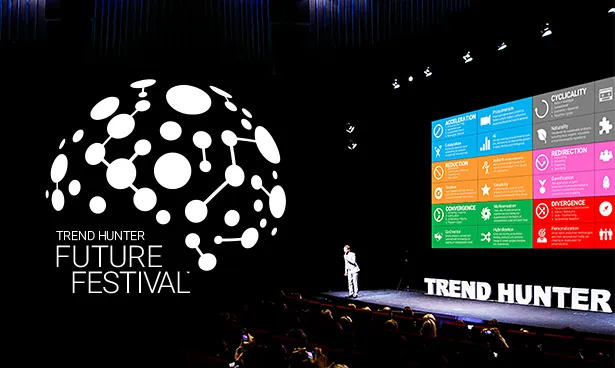
Trend Hunter activity is more than just a hobby for the curious; it is a sophisticated method of navigating the future of global commerce and culture. In a world that moves at the speed of a fiber-optic connection, the ability to see what is coming around the corner before everyone else does is a superpower. It involves a mix of curiosity, data analysis, and an almost intuitive sense of human psychology. Whether you are a business owner trying to stay relevant or a creative looking for the next big idea, understanding how patterns emerge is the key to long-term sustainability.
I remember the first time I noticed a shift in the way people were interacting with their environment. It was years ago, long before remote work became the standard. I saw small pockets of people in various cities setting up “mobile offices” in unconventional spaces like hotel lobbies and public parks. At the time, it seemed like an anomaly, but to a trained eye, it was a signal. That is the essence of this work—seeing the small, quiet signals before they become a deafening roar in the mainstream market.
Becoming an effective hunter of trends requires you to unlearn the habit of looking only at what is popular right now. Popularity is a lagging indicator; by the time something is on the front page of a major magazine, the trend has already peaked. To find the next big thing, you have to look at the fringes. You have to look at the innovators, the rebels, and the niche communities that are experimenting with new ways of living and working. It is a process of constant observation and deep reflection on why people do what they do.
Defining the Trend Hunter Mindset
To truly embody the role of a Trend Hunter, one must cultivate a mindset that is perpetually open and aggressively curious. This isn’t about simply following news feeds or reading reports. It is about developing a “peripheral vision” for change. Most people focus on the center of the frame, but the most interesting developments almost always happen at the edges. You have to be willing to look at industries that have nothing to do with your own and ask how their innovations might cross over into your world.
Consider the rise of sustainability in the fashion world. This didn’t start in the boardrooms of high-end luxury brands. It started with independent creators, scientists experimenting with mushroom leather, and activists demanding transparency. A person who was paying attention to biotechnology and social movements five years ago could have predicted the shift we see today. This ability to connect seemingly unrelated dots is the hallmark of a true expert in this field.
Empathy is another overlooked component of this mindset. Trends are not just abstract movements in the market; they are manifestations of human needs and desires. If you want to know what the next trend will be, you have to understand what people are missing in their lives. Are they craving more connection? Are they looking for more simplicity? When you identify an unmet emotional need, you can predict the products and services that will eventually rise to meet it.
Furthermore, you must be comfortable with being wrong occasionally. Not every signal leads to a full-blown trend. Some ideas are just fads that burn out quickly, while others are “false starts” that arrive before the technology or the culture is ready for them. A seasoned professional knows how to hedge their bets and look for “clusters” of evidence rather than betting everything on a single observation. It is a game of probability and pattern recognition that requires patience and humility.
The Tools and Techniques of a Modern Trend Hunter
In the digital age, a Trend Hunter has access to an incredible array of tools that can help filter the noise of the internet. Social listening platforms, search data, and niche community forums like Reddit or Discord are goldmines for early signals. By tracking the rise of specific keywords or the emergence of new slang, you can see a cultural shift in real-time. However, the tool is only as good as the person using it. You have to know which questions to ask and which data points to ignore.
One of my favorite techniques is “crowd-scanning.” This involves looking at what the most engaged and passionate small groups are discussing. If a specific topic is causing a lot of friction or excitement in a small, expert community, it is only a matter of time before that energy moves into the broader public consciousness. This is how many of the biggest shifts in technology, such as blockchain or generative AI, were identified by specialists years before they became household names.
Physical observation remains just as important as digital tracking. Walking through different neighborhoods, visiting local markets, and observing how people interact in public spaces provides a level of nuance that data cannot capture. You might notice a change in the way people are dressing or a new type of street art that signals a shift in political sentiment. These “analog” insights often provide the context that makes digital data meaningful.
Another vital technique is the study of “analogous industries.” If you are in the food industry, look at what is happening in architecture. If you are in tech, look at what is happening in modern dance. Often, a structural change in one field will foreshadow a similar change in another. For instance, the move toward “modular” design in furniture eventually mirrored the move toward “micro-services” in software engineering. The world is more interconnected than we think, and patterns repeat across different disciplines.
Distinguishing Between a Viral Fad and a Lasting Trend
A major part of the job is being able to tell the difference between a flash-in-the-pan fad and a tectonic shift in culture. A fad is usually characterized by a sudden spike in interest that is driven by novelty or social signaling. It is often shallow and doesn’t solve a fundamental problem. Think of certain viral dance challenges or temporary fashion accessories. While they can be profitable in the short term, they don’t have the staying power to change the world.
A lasting trend, on the other hand, is driven by a fundamental change in human behavior or technology. It usually starts slowly and builds momentum over several years. It solves a real problem or fulfills a deep-seated desire. For example, the shift toward plant-based diets isn’t just a fad; it is a trend driven by concerns over health, environment, and ethics. It is supported by massive investments in food science and changes in global supply chains. This is a movement that has staying power because it is anchored in reality.
To distinguish between the two, a Trend Hunter often looks for what we call “drivers of change.” These are the underlying forces like demographic shifts, economic fluctuations, or technological breakthroughs. If a new behavior is supported by multiple drivers, it is likely a trend. If it is just a funny video that everyone is sharing for a week, it is almost certainly a fad. Understanding this distinction is what saves businesses from wasting millions of dollars on temporary distractions.
We also look at the “velocity” of an idea. Fads tend to have an extremely high velocity—they go from zero to a hundred in a matter of days. Trends usually have a more gradual slope. They have a period of incubation where they are refined by early adopters before they ever reach the mainstream. This incubation period is where the real work happens. If you can identify an idea during its incubation phase, you have the time to build a strategy around it before the market becomes crowded.
The Economic Impact of Accurate Trend Analysis
For businesses, having a dedicated Trend Hunter on the team can be the difference between growth and obsolescence. Entire industries have been disrupted because they failed to see a shift in consumer behavior. The decline of traditional retail and the rise of e-commerce is the most cited example, but it happens on a smaller scale every day. Companies that can anticipate shifts in taste or technology can pivot their product lines and marketing strategies to stay ahead of the curve.
This isn’t just about avoiding disaster; it is about finding new opportunities for value creation. When you identify a trend early, you can be the first to market with a solution. This gives you a significant competitive advantage and allows you to establish your brand as a leader in the new space. It also allows for more efficient allocation of resources. Instead of trying to be everything to everyone, you can focus your energy on the areas that are most likely to grow in the future.
Investment firms and venture capitalists are perhaps the most aggressive users of trend analysis. They are constantly looking for the “next big thing” to fund. By identifying sectors that are poised for explosive growth, they can generate massive returns for their clients. But even for a small freelancer or a solo creator, being aware of trends allows you to position your skills in a way that is highly in demand. It allows you to “future-proof” your career by constantly evolving in line with the market.
Moreover, trend hunting helps in risk management. By seeing potential threats early—such as a shift in regulation or a change in public sentiment toward a certain material—a company can begin the process of diversifying its interests. It is about being proactive rather than reactive. In a fast-moving economy, being reactive is often too late. You need to be standing where the puck is going to be, not where it has already been.
Future-Proofing Your Career as an Insight Specialist
As we look toward the future, the role of the insight specialist is only going to become more important. As artificial intelligence takes over more of our routine tasks, the ability to provide high-level synthesis and human-centric intuition will be at a premium. AI is great at processing large amounts of data, but it struggles to understand the nuance of human emotion or the subtle context of a cultural movement. This is where the human element remains irreplaceable.
A successful Trend Hunter in the future will be someone who can partner with AI to filter data while providing the “soul” of the analysis. They will be the ones who can ask the right questions and interpret the results through a lens of ethics and humanity. It is about becoming a “curator” of information rather than just a collector. In a world of information overload, the person who can tell you what actually matters is the person who holds the power.
Education in this field is also evolving. While there are now formal courses in trend forecasting and cool-hunting, much of the best training still comes from a diverse background in the humanities. Studying history, sociology, philosophy, and art gives you the frameworks needed to understand the long cycles of human behavior. It helps you realize that while the technology changes, human nature remains remarkably consistent. The “new” is often just an old desire in a different package.
Networking is another critical component of staying relevant. You need to have a “brain trust” of people from different backgrounds who can challenge your assumptions. If you only talk to people in your own industry, you will eventually develop tunnel vision. By engaging with scientists, artists, and entrepreneurs from around the world, you keep your perspective fresh and your insights sharp. It is about building a personal ecosystem of curiosity that constantly feeds your professional work.
Applying Strategic Foresight to Personal Growth
On a personal level, using these techniques can lead to a much more fulfilling and intentional life. When you stop being a passive consumer of culture and start being an active observer, you regain a sense of agency. You can choose which movements to join and which to ignore. You can anticipate changes in your own industry and begin learning the skills you will need five years from now. It turns the uncertainty of the future into a playground of possibility.
I often tell people that the best way to start is to keep a “discovery log.” Every day, write down one thing you saw that felt new, strange, or interesting. It doesn’t have to be a major insight; it could just be a new type of packaging or a unique way someone solved a problem. Over time, these individual entries will start to form patterns. You will begin to see the threads that connect your observations, and that is when the magic starts to happen.
This practice also fosters a sense of gratitude and presence. To be a hunter of trends, you have to be deeply present in the moment. You have to look at the world with “beginner’s eyes,” as if you are seeing everything for the first time. This prevents life from becoming a blur of routine and helps you appreciate the incredible creativity and innovation that is happening all around us every single day.
Ultimately, the goal is to develop a sense of “strategic foresight.” This is the ability to create a vision for the future and then work backward to see what steps are needed to get there. It is about being the architect of your own destiny rather than just a passenger on someone else’s ship. The future isn’t something that just happens to us; it is something we build through the choices we make today, guided by the insights we gather from the world around us.
Investing in your ability to see patterns is the best investment you can make in yourself. The tools will change, the platforms will change, and the trends themselves will certainly change. but the skill of observation is evergreen. It is a journey that never truly ends, because the world never stops evolving. As long as there are humans dreaming, creating, and solving problems, there will be new trends to discover and new stories to tell.
By staying curious and keeping your eyes wide open, you become a bridge between the present and the future. You help others navigate the complexity of our times and find the opportunities hidden in the chaos. It is a role that requires both a sharp mind and an open heart, and for those who are willing to do the work, it offers a front-row seat to the unfolding of human history. The next big thing is out there right now, waiting for someone to notice it. Will it be you?