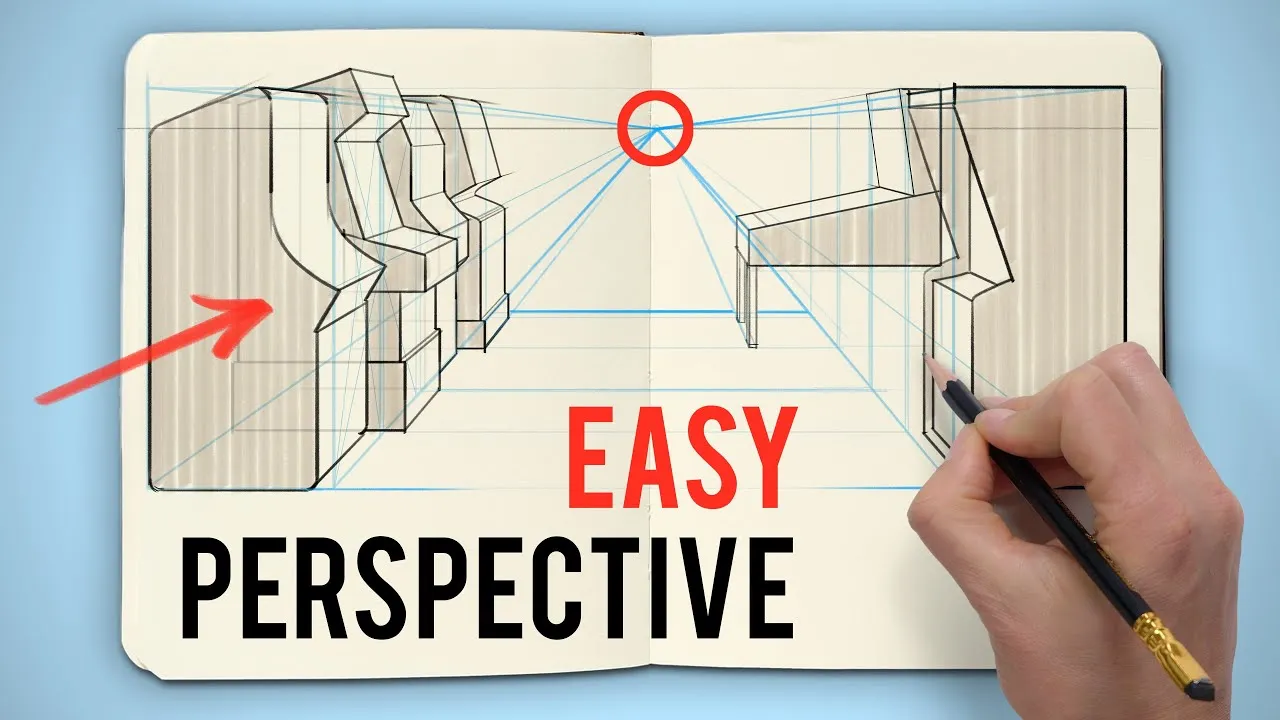
Perspective drawing basics are the foundation of creating realistic and engaging artwork. Imagine sketching a city street where buildings stretch into the distance, cars shrink as they move away, and people appear smaller the farther they are. This illusion of depth is what makes drawings feel alive, and it all begins with understanding perspective.
Artists throughout history have relied on perspective to bring their work closer to reality. From Renaissance painters to modern illustrators, mastering perspective transforms flat sketches into immersive scenes that capture the viewer’s attention.
Perspective drawing basics in Everyday Creativity
Many beginners struggle with making their drawings look three-dimensional. A student once shared how her sketches of houses always looked flat until she learned Perspective drawing basics. By adding vanishing points and guiding lines, her drawings suddenly had depth, making them more believable.
Even everyday doodles benefit from perspective. Sketching a coffee mug on a table or a chair in a room becomes more convincing when perspective rules are applied. It’s not just about technical skill—it’s about seeing the world differently.
Why Perspective drawing basics Matter
Without perspective, drawings lack realism. Perspective drawing basics ensure that objects appear proportionate and positioned correctly in space. A tree closer to the viewer should look larger than one in the distance, and streets should narrow as they recede. These principles help artists communicate space and depth effectively.
Perspective also enhances storytelling. A comic artist explained how using dramatic angles and perspective made action scenes more dynamic, pulling readers into the narrative.
Perspective drawing basics in Technology
Digital tools have revolutionized how artists practice Perspective drawing basics. Software like Photoshop, Procreate, and Clip Studio Paint offers perspective grids that guide artists in creating accurate scenes. These tools simplify complex setups, allowing beginners to focus on creativity rather than technical struggles.
3D modeling programs also help. Artists can build simple models of environments, then sketch over them using perspective rules. This hybrid approach blends traditional techniques with modern technology.
Perspective drawing basics for Storytelling
Perspective isn’t just technical—it’s emotional. A low-angle perspective can make a character look powerful, while a high-angle view can make them appear vulnerable. These choices influence how audiences perceive the story.
One illustrator shared how drawing a hero from a low perspective made the character feel larger-than-life, while sketching a villain from above diminished their presence. Perspective becomes a storytelling tool, shaping mood and meaning.
Perspective drawing basics in Education
Teachers are integrating Perspective drawing basics into art classes. Students learn one-point, two-point, and three-point perspective, practicing with simple shapes before moving to complex scenes. These exercises sharpen observation skills and build confidence.
Architecture schools especially emphasize perspective. Students sketch buildings to study proportion and design, applying perspective rules to ensure accuracy. These skills translate into professional practice, where precision is essential.
Perspective drawing basics for Stress Relief
Sketching with perspective can be therapeutic. Adults often turn to drawing as a way to relax, and adding perspective makes the process more engaging. A hobbyist explained how sketching cityscapes helped him unwind after work, focusing his mind on lines and angles rather than stress.
Unlike freeform doodling, perspective drawing requires concentration. This mindfulness aspect makes it a calming activity, encouraging focus and creativity.
Perspective drawing basics in Communities
Global communities thrive around perspective drawing. Artists share sketches online, participate in challenges, and collaborate on projects. Social media platforms showcase diverse styles, from architectural drawings to imaginative fantasy worlds. These communities inspire newcomers and foster cultural exchange.
Workshops and exhibitions also highlight perspective techniques. Attendees learn methods, experiment with tools, and discover how perspective transforms their art.
Perspective drawing basics for Different Styles
Perspective adapts to countless styles. Realism, cartoons, fantasy, and sci-fi all benefit from perspective rules. A comic artist explained how exaggerated perspective enhanced humor, while a game designer emphasized how realistic proportions improved immersion.
Fashion illustrators use perspective to sketch outfits on models, while landscape artists rely on it to capture depth in nature scenes. The diversity of applications shows the versatility of perspective.
Perspective drawing basics in Business
Entrepreneurs leverage Perspective drawing basics for branding, marketing, and design. Product sketches, advertisements, and architectural plans often begin with perspective drawings. A startup founder shared how sketching prototypes with perspective helped investors visualize products more clearly.
Freelancers too find opportunities. Platforms like Etsy showcase perspective-based art prints, offering personalized designs to clients worldwide.
Perspective drawing basics for Personal Growth
Beyond professional use, perspective drawing fosters personal growth. Artists develop patience, focus, and problem-solving skills. A hobbyist shared how practicing perspective every weekend became a mindfulness practice, helping him explore creativity and discipline.
The journey of mastering perspective is as rewarding as the final artwork. Each sketch reflects growth, experimentation, and imagination.
Final Word on Perspective drawing basics
The rise of Perspective drawing basics marks a new era in creativity. They empower individuals to explore realism, enhance education, relieve stress, and build businesses. Whether you’re a beginner, professional, or hobbyist, perspective drawing opens doors to endless imagination.
Read also :-
2105817564
8005113030
7122520583
18667066894
8552320669