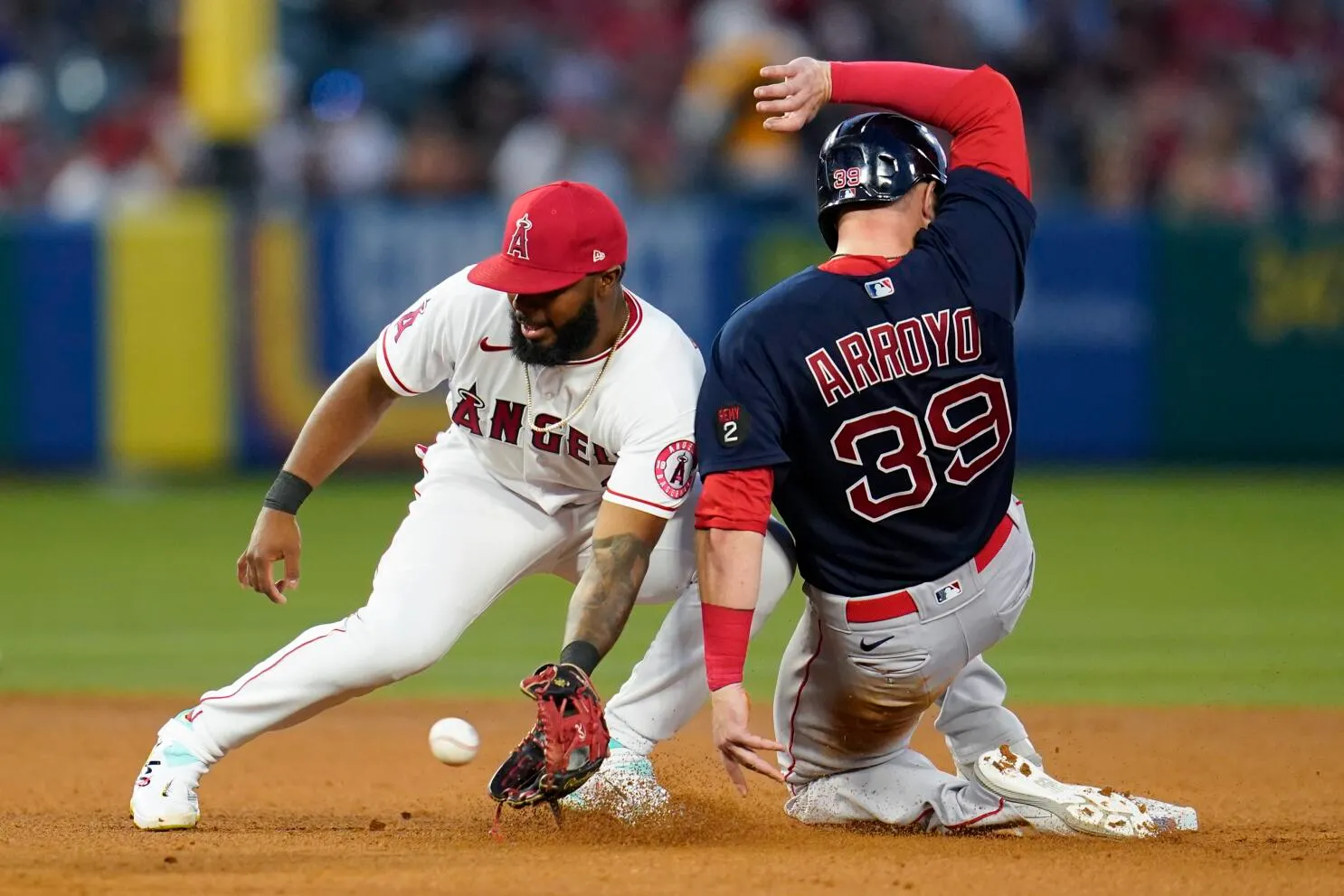
red sox vs los angeles angels match player stats offer a fascinating window into the current state of Major League Baseball, showcasing a blend of coastal styles and historical prestige. When the Boston Red Sox travel to the West Coast or the Los Angeles Angels visit the hallowed grounds of Fenway Park, the box score becomes a living document of strategy and skill. Fans and analysts alike pore over these numbers to understand not just who won, but how individual performances dictated the rhythm of the nine-inning battle.
The atmosphere during these games is always unique, as the East Coast grit of Boston meets the sunny, optimistic energy of Anaheim. Whether it is a chilly April evening in Massachusetts or a warm summer night in Southern California, the statistics generated by these athletes tell a story of resilience. We see pitchers fighting through high pitch counts and hitters searching for that one perfect hanging slider. Every strikeout and every double into the gap adds a new layer to the ongoing narrative of this American League rivalry.
For the casual viewer, the scoreboard might be the only thing that matters, but for the true student of the game, the player stats are where the real action lives. Tracking the exit velocity of a Rafael Devers home run or the spin rate of an Angels’ reliever provides a level of depth that makes baseball the “thinking man’s game.” These metrics allow us to appreciate the microscopic margins of error that separate a big-league star from a minor-league hopeful.
In recent years, the red sox vs los angeles angels match player stats have been dominated by discussions of generational talent and the evolution of pitching philosophies. The transition from traditional statistics like wins and batting average to more nuanced data like WAR and xwOBA has changed how we evaluate these matchups. It is no longer enough to look at who got the hit; we want to know how hard the ball was hit and what the probability of that hit was based on the launch angle.
Breaking Down the red sox vs los angeles angels match player stats for Pitchers
Pitching is the heartbeat of any baseball game, and the stats from this series often highlight a contrast in mound management. The Red Sox have historically leaned on high-strikeout starters who can command the zone with a mix of fastballs and devastating breaking balls. When you look at their match stats, the “K/9” (strikeouts per nine innings) is often a key indicator of their success against a lineup that features some of the most feared hitters in the world.
The Angels, on the other hand, have frequently used a “bullpen game” approach or relied on high-ceiling young arms who are still finding their consistency. Their pitching stats often show a higher number of “holds” and “blown saves,” reflecting the volatile nature of a relief corps under pressure. Analyzing the walk rate is particularly revealing, as the patient Red Sox hitters are notorious for working deep counts and forcing opposing pitchers into high-stress situations early in the game.
Earned Run Average (ERA) remains a staple of the box score, but in a Red Sox vs. Angels matchup, “FIP” (Fielding Independent Pitching) often provides a more accurate picture of a pitcher’s performance. Because both Fenway Park and Angel Stadium have unique dimensions, a pitcher might give up a fly ball that would be an out in any other park but becomes a “Green Monster” double in Boston. These statistical anomalies are part of what makes the head-to-head data so compelling for researchers and fantasy owners.
Individual pitching performances often become the stuff of legend in this series. A pitcher throwing a complete game shutout is a rarity in the modern era, but when it happens, the “game score” metric reaches elite levels. We look at the “first-pitch strike percentage” to see which team’s staff is dictating the count. When a pitcher is consistently ahead 0-1, the rest of the stat line usually follows in a positive direction, leading to lower WHIP (Walks plus Hits per Innings Pitched) and more efficient outings.
Evaluating Hitting Trends in the red sox vs los angeles angels match player stats
On the offensive side, the red sox vs los angeles angels match player stats are usually a showcase for some of the best pure hitters in the league. For Boston, the focus is often on their ability to spray the ball to all fields, utilizing the short porch in right field and the looming wall in left. Their “doubles” count is frequently higher than the league average, as they are masters of taking the extra base when the ball rattles around the corners of Fenway.
The Angels’ offense has been synonymous with power and speed for much of the last decade. Looking at the “slugging percentage” and “home run” counts gives a clear indication of how they attempt to win games. They aren’t always looking to dink and dunk their way to a run; they are hunting for the big fly that can change the game in a single swing. This aggressive approach is reflected in their higher strikeout totals, a trade-off they are often willing to make for the chance at a multi-run inning.
“On-base percentage” (OBP) is perhaps the most underrated stat in these matchups. A player who can draw a walk in a clutch situation is just as valuable as one who hits a single, and the stats reflect this through the “OPS” (On-base Plus Slugging) metric. In games where the score is tight, the ability to get runners on base for the heart of the order is what separates the winners from the losers. Seeing a high OBP from the lead-off hitter usually signals a long night for the opposing pitcher.
Base running stats also play a role, though they are often overshadowed by home runs. Stolen bases and “extra bases taken” provide insight into the athleticism of the rosters. The Angels have often featured players who can burn up the base paths, forcing the Red Sox catchers to be perfect with their “pop time” and throwing accuracy. These small battles are documented in the player stats, providing a comprehensive look at how speed can disrupt even the most disciplined defensive units.
The Influence of Stadium Dimensions on Statistical Output
One cannot discuss the red sox vs los angeles angels match player stats without mentioning the venues. Fenway Park is a statistical outlier in almost every category. The Green Monster in left field turns routine fly balls into doubles and home runs into long outs. This significantly impacts the “ISO” (Isolated Power) of hitters who naturally pull the ball. A right-handed hitter for the Angels might see their stats inflated or deflated depending on how they adjust to the wall’s presence.
Angel Stadium of Anaheim offers a much more traditional layout, but it has its own quirks, such as the “moat” in the outfield and the way the ball carries in the cool evening air. The “park factor” is a statistical tool used to normalize player performances across these different environments. When we look at the match stats, a hitter who goes 3-for-4 in Boston might have had a different outcome in Anaheim, and advanced metrics help us quantify that difference with “Expected” stats.
The sun and shadows also play a role in afternoon games, especially in the early innings. This often leads to a spike in strikeouts or “swinging strikes,” as hitters struggle to pick up the spin on the ball. These environmental factors are captured in the “splits” found in the player stats. You can see how a player performs during day games versus night games, or how they handle the specific lighting conditions of the visiting stadium.
Weather is another variable that shows up in the data. A windy day in Boston can turn a pop-up into a nightmare for a shortstop, leading to an “error” in the stat sheet or a “hit” that should have been an out. In Anaheim, the marine layer can occasionally “knock down” fly balls that would otherwise leave the park. These nuances are why the red sox vs los angeles angels match player stats are so much more than just a summary of play; they are a record of the battle against the elements.
Defensive Excellence and the “Invisible” Statistics
Defense is often the most difficult part of the game to quantify, but modern player stats have made great strides in this area. “Defensive Runs Saved” (DRS) and “Outs Above Average” (OAA) provide a look at who is actually helping their team prevent runs. In a Red Sox vs. Angels game, a spectacular diving catch in the gap might only show up as an “out” in the basic box score, but the advanced stats will give the fielder credit for the degree of difficulty.
The Red Sox have prioritized defensive versatility in their recent roster builds, and this shows up in the number of players who can shift between positions mid-game. This flexibility affects the “Total Zone” rating and other fielding metrics. For the Angels, having an elite center fielder can significantly lower the team’s ERA by turning potential hits into outs. These defensive contributions are vital for understanding why a pitcher might have a great stat line despite not having their best stuff.
Catcher “framing” is another “invisible” stat that has gained prominence. A catcher who can steal strikes for their pitcher can drastically alter the outcome of an at-bat. When we look at the red sox vs los angeles angels match player stats, the strikeout totals are often a reflection of the catcher’s skill just as much as the pitcher’s arm. This data is now publicly available, allowing fans to see which backstops are the most effective at working the edges of the plate.
Infield shifts, while limited by recent rule changes, still play a role in the statistical distribution of ground balls. Shortstops and second basemen are positioned based on years of spray chart data, and their ability to execute those plays is reflected in the “fielding percentage.” A team that commits fewer errors and makes the routine plays is almost always the one that finds itself on the right side of the final score in these tightly contested American League games.
The Role of Sabermetrics in Modern Scouting Reports
Sabermetrics has revolutionized how teams prepare for a series between the Red Sox and the Angels. Front offices use the red sox vs los angeles angels match player stats to identify weaknesses in the opposition. For example, if a Red Sox hitter has a low “success rate” against high velocity up in the zone, the Angels’ staff will be instructed to attack that specific area. This cat-and-mouse game is played out in the “pitch location” data that accompanies every match.
“Leverage Index” is a fascinating stat that shows how important a particular moment in the game was. A strikeout in the first inning with no one on base has a low leverage index, while a strikeout in the ninth with the bases loaded has a high one. By looking at “Clutch” ratings, we can see which players from Boston or Los Angeles perform the best when the game is on the line. These numbers help managers decide who to pinch-hit or which reliever to bring into a high-stakes situation.
The use of “Exit Velocity” and “Launch Angle” has become so mainstream that it is now part of the standard broadcast. These stats provide an immediate explanation for why a ball traveled 450 feet or why a line drive was caught. In the match stats, these numbers help us identify “unlucky” hitters—those who are hitting the ball hard but right at defenders. Over a long series, these stats usually “even out,” but in a single game, they provide great talking points for fans.
“WPA” (Win Probability Added) is perhaps the ultimate sabermetric for a single game. It measures how much each individual play changed the team’s chances of winning. A walk-off home run will have a massive WPA, while a groundout in a blowout will have almost none. Reviewing the WPA after a Red Sox vs. Angels game allows us to see who the true MVP of the night was, regardless of who had the most hits or the highest batting average.
Historical Context and Career Milestones
The red sox vs los angeles angels match player stats also carry the weight of history. Both franchises have retired jerseys of legendary players who once dominated these very stat lines. When a current player reaches a milestone, such as their 1,000th hit or 200th home run, during this series, it adds to the prestige of the matchup. The historical “head-to-head” data shows how the balance of power has shifted back and forth between the two coasts over the decades.
Mike Trout’s career stats against the Red Sox are a particular point of interest. As one of the greatest players to ever wear an Angels uniform, his performance at Fenway Park is always a headline story. Similarly, the Red Sox’s legendary hitters have often used the warm air of Anaheim to boost their seasonal averages. These long-term statistical trends provide a foundation for the “expert” analysis that precedes every game, giving fans a reason to care about every at-bat.
The “Shohei Ohtani Era” in Anaheim provided some of the most unique statistical profiles in the history of the sport. Seeing a player lead the team in both home runs and strikeouts as a pitcher was something the world had never seen before. Even with his departure, the impact of his time with the Angels is still felt in the “historical averages” used by analysts to compare current teams. The data from those years remains a benchmark for what is possible on a baseball diamond.
Rookies making their debut in this series also create interesting statistical narratives. A young pitcher facing the Fenway crowd for the first time will have a “nervous” stat line that usually settles down as the game progresses. These human elements are captured in the “inning-by-inning” splits, showing the mental toughness required to succeed in the big leagues. Every box score is a snapshot of a player’s journey, and in this rivalry, the journey is always filled with high-stakes moments.
The Impact of the Designated Hitter and Lineup Construction
The Designated Hitter (DH) rule, once a point of difference between the leagues, is now universal, but its impact on the red sox vs los angeles angels match player stats remains significant. Both teams often use the DH spot to give a star player a “partial day off” from fielding while keeping their bat in the lineup. This affects the “team batting average” and allows for more creative lineup construction, such as stacking left-handed hitters against a right-handed starter.
The “Batting Order” stats show how a manager’s philosophy influences the game. The Red Sox might prioritize “on-base percentage” at the top of the order, while the Angels might look for “contact” to move runners along. These decisions are reflected in the “RBI” (Runs Batted In) opportunities created for the middle of the order. A clean-up hitter’s success is often a direct result of the guys in front of them getting on base, a symbiotic relationship that is clearly visible in the data.
“Plate Appearances per Strikeout” is a stat that shows the discipline of a lineup. A team that makes the pitcher work and refuses to swing at pitches out of the zone will naturally have a higher “Pitch Count per Inning” average. This is a classic Red Sox trait that has been part of their identity for years. The Angels counter this with an “aggressive early in the count” approach, looking to ambush a starter before they can get into a rhythm.
The “bench” stats are also vital, as pinch-hitters and defensive replacements can change the course of a game in the late innings. A “sacrifice fly” or a “bunt” might not be as exciting as a home run, but in the final box score, these small plays are what drive the “Runs” column. The tactical depth of the MLB is such that even the 26th man on the roster can have a statistical impact that decides the outcome of a game between two of the league’s most storied franchises.
Looking Ahead to Future Matchups and Data Trends
As technology continues to advance, the red sox vs los angeles angels match player stats will only become more detailed. We are moving toward a future where we can track the “stress level” of a pitcher or the “reaction time” of a fielder in milliseconds. This data will provide even more ways for fans to engage with the sport and for teams to find a competitive edge. The rivalry between Boston and Los Angeles will remain a prime testing ground for these new metrics.
The “Statcast” era has already changed how we talk about the game, and the next generation of stats will likely focus on “biometrics” and “spatial awareness.” Imagine knowing exactly how a player’s swing speed changes after eight innings in the sun. This information will be used by managers to make even more informed decisions about substitutions and rest days. The box score of the future will be a multidimensional map of human performance.
Despite all the technology, the core of the game remains the same. It is a battle of will between the pitcher and the hitter. The stats are just our way of keeping score and trying to make sense of the beauty we see on the field. Whether you are a fan of the Red Sox or the Angels, the player stats are a way to connect with the game on a deeper level, appreciating the incredible skill required to compete at the highest level of professional sports.
As we continue to analyze the red sox vs los angeles angels match player stats, we are reminded of the passion and dedication that these players bring to every game. From the first pitch to the final out, the numbers tell a story of triumphs and failures, of lessons learned and goals achieved. It is a story that is written every day during the long MLB season, and it is one that fans will continue to follow with unwavering enthusiasm for years to come.